
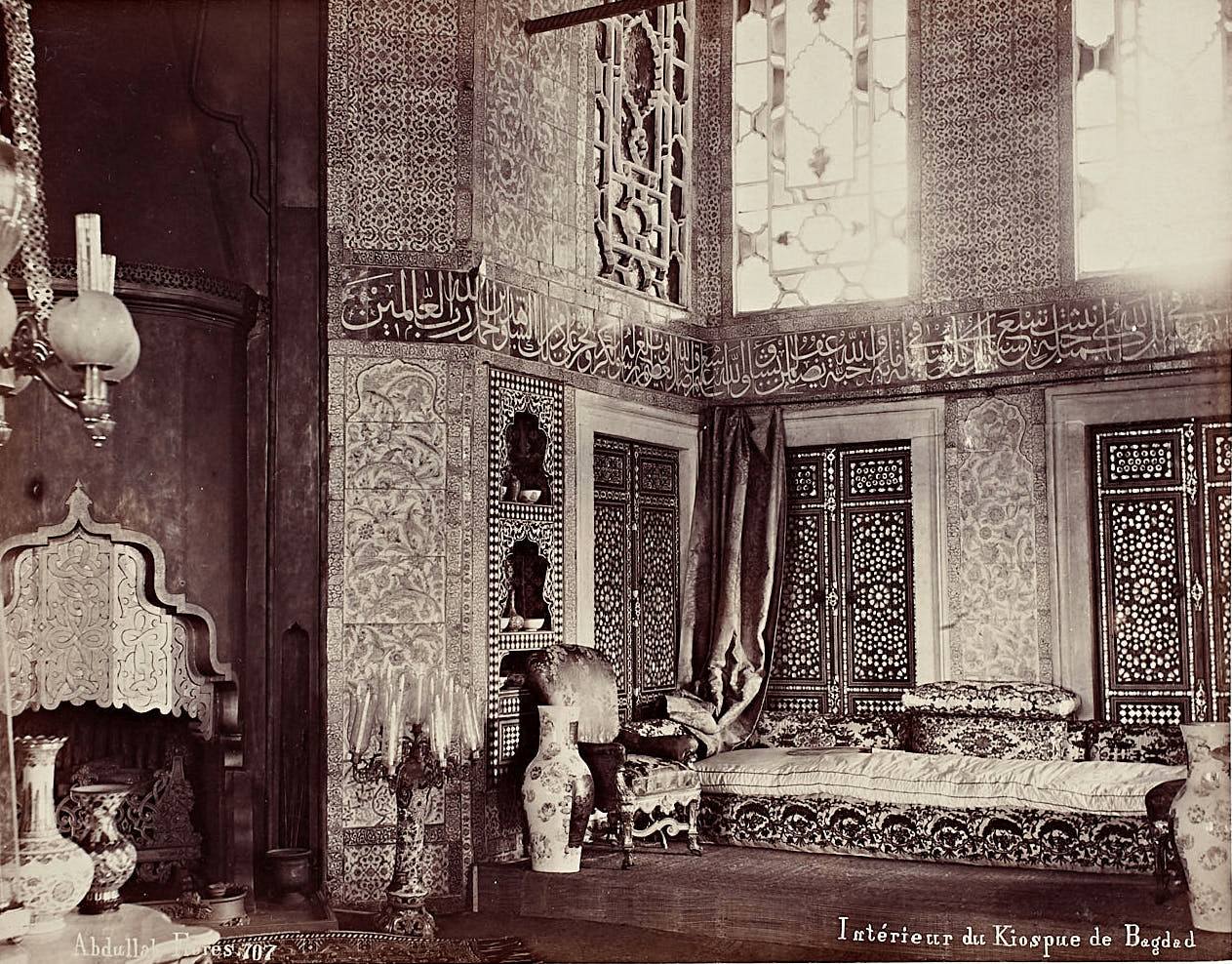

Nilay Özlü and Enno Maessen discuss the changing roles of Topkapı Palace, from Abdulaziz to the Allied Occupation.
Nilay is Associate Professor at Istanbul Technical University’s Department of Landscape Architecture.
When Nilay Özlü began researching the history of Topkapı Palace in the years after it was abandoned by the Sultan, she expected to find a complex stripped of its functions. Instead her decade-long investigations have uncovered a tale of transformation, as the Palace became “an agency in the modernisation of the late Ottoman Empire.” In a conversation with Enno Maessen, recorded on July 10 2023, Nilay explains how it continued to host enthronement, sword-girding and other ceremonies for select groups of western visitors. After the 1908 Revolution and in particular under the Allied Occupation of 1919-1923, it was opened up to the general public, as well as becoming a stage for struggles over imperial collections and artefacts – some recently uncovered by French archaeologists, others translated from the tomb of the Prophet in Medina by Fahreddin Pasha. While French officials sought to claim items such as the so-called Virgin of Gülhane for the Louvre in Paris, British officials at Lausanne in 1922-3 demanded (in the name of their Muslim imperial subjects) the return of tomb treasures to Medina.
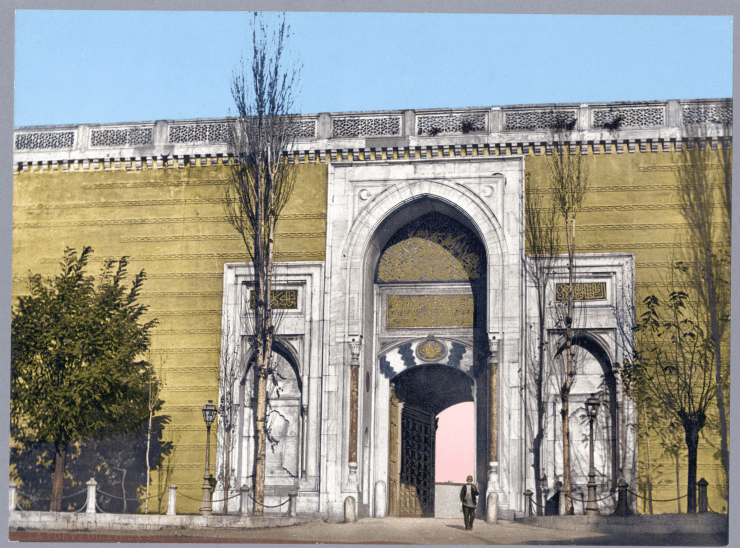
IMPERIAL GATE, TOPKAPI PALACE, C. 1890. LIBRARY OF CONGRESS LOT 14184, no. 626
Episode 39 – Corridors of Power
Podcasts are published by TLP for the purpose of encouraging informed debate on the legacies of the events surrounding the Lausanne Conference. The views expressed by participants do not necessarily represent the views or opinions of TLP, its partners, convenors or members.
MAIN IMAGE: INTERIOR OF BAGHDAD KIOSK in TOPKAPI PALACE. ISTANBUL UNIVERSITY, RARE BOOKS COLLECTION 90815-0049.
 The Lausanne Project