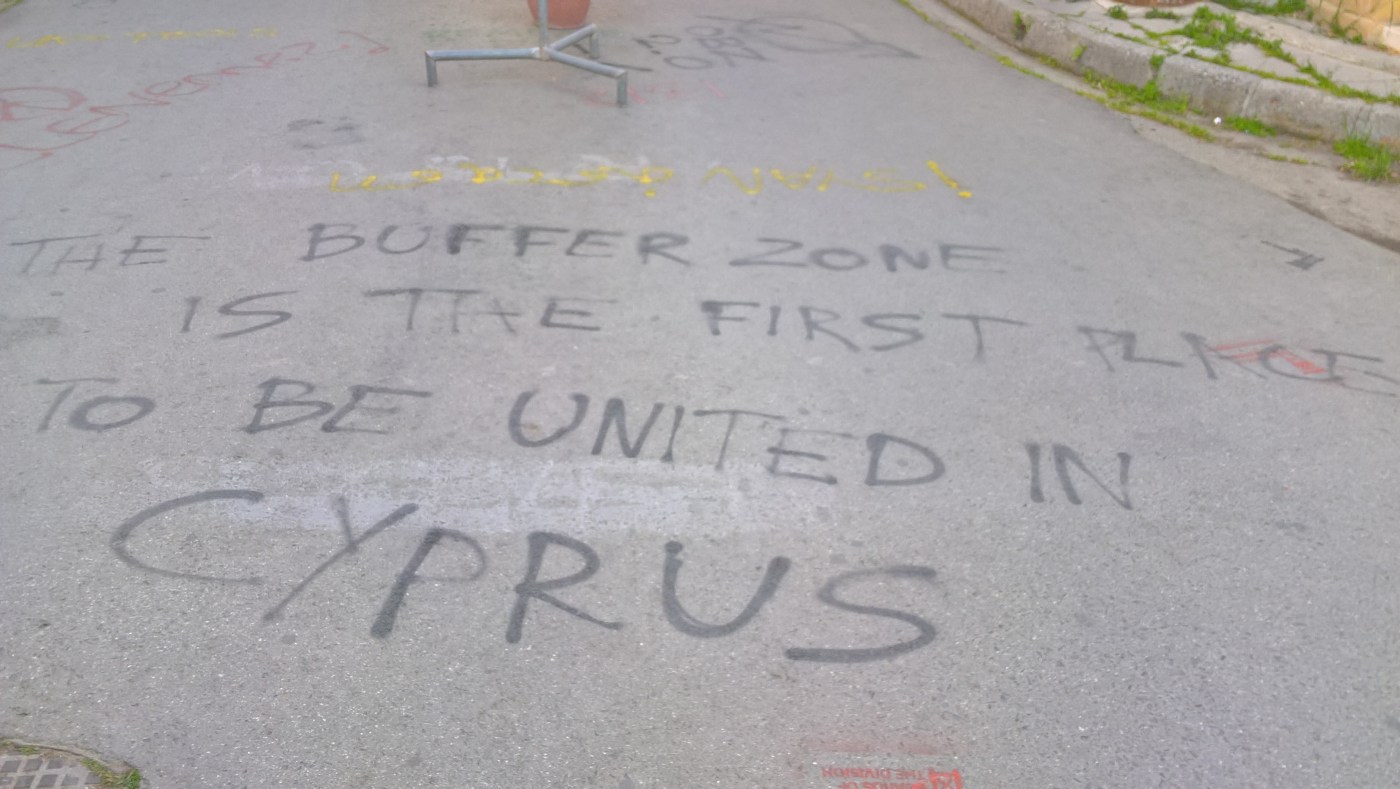

Emma Saville reports from Nicosia, where she and fellow geographers sought to find out why young Cypriots appear reluctant to engage in grassroots peace-building initiatives.
.
Emma is studying Geography at Newcastle University.
Before undertaking this fieldwork module the term ‘divided cities’ seemed a relic of the past, long resolved through diplomacy or societal progress. It wasn’t until our lecturer, Dr Matthew Benwell, gave a series of lectures on the history and geopolitical landscape of Cyprus that I began to realise that divided cities are not merely relics of the past but complex urban spaces where everyday life unfolds amidst ongoing efforts towards reconciliation and integration. Consequently, arriving in Nicosia for the first time this past April was a profoundly eye-opening and unexpectedly poignant experience that transformed my understanding of urban divisions.
Despite studying the historical background, I was unprepared for the palpable remnants of conflict that still shape the everyday realities of Nicosia. Witnessing the physical demarcation of the UN controlled buffer zone, the visible military presence, and the subtle yet persistent hostilities among the people, I was struck by the enduring nature of division and the intricate layers of history, memory, and identity that continue to shape Nicosia. These reflections, as well as the fact of being a student myself, inspired me to question how young Cypriots, too young to have directly experienced the conflict itself, chose to engage with initiatives promoting peace and understanding. Grassroots-level initiatives intended to build trust, promote dialogue, and support peacebuilding processes between Greek and Turkish Cypriots have increasingly emphasised youth participation, recognising the younger generation’s role in creating a foundation for a peaceful future.
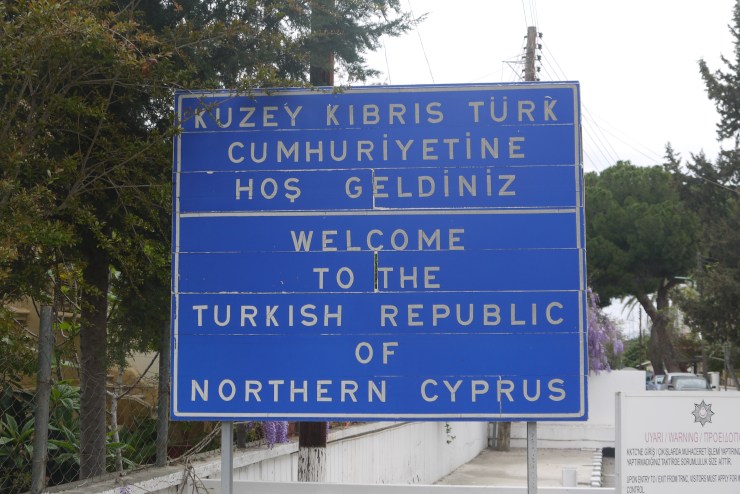
Our project explored why young Cypriots may be discouraged from engaging in such projects, which include activities such as sport, music and craft. Based on four interviews with students in Nicosia, our research focused specifically on the influence of education in shaping young people’s attitudes towards intergroup dialogue and cooperation. Existing literature has noted the importance of bi-communal initiatives, but little is written about the difficulties these initiatives face in facilitating participation.
The first theme identified in our interviews was role educational systems played in shaping young people’s attitudes towards intergroup dialogue and cooperation. From a young age, children are taught that those living on ‘the other side’ are ‘enemies’ and should not be treated with respect or dignity. One noted that “we hardly learnt anything about them [Turkish Cypriots] because we were told that they were irrelevant to our studies”. According to Christou & Spyrou, this process of “othering” perpetuated notions of superiority and inferiority through educational narratives and socialisation processes that occur within childhood. Early education consolidated the construction of hegemonic ideologies, through the dissemination of ethnic and political narratives that reinforce dominant structures of power.[1] One student quoted a common Greek Cypriot phrase he had been taught in school: “The only good Turk is a dead Turk”. As Trimikliniotis notes, education itself may act as a “mechanism or tool in which discrimination and inequality are reproduced and maintained”.[2]
Secondly, our project highlighted how language and imagery in textbooks shaped discriminatory narratives of similar or identical historical events. As Lucas, a Greek Cypriot student, recalled: “Even though we were young, the pictures were so graphic … the teacher told us the Turks brutally attacked the Greek soldiers and murdered them in horrible ways and that they should never be forgiven.” [3] By using emotionally-loaded descriptions of suffering, both communities perpetuate a sense of victimisation which serves to justify their own grievances and perpetuate animosity towards the other side. In this sense, both Greek and Turkish Cypriot authorities use the teaching of trauma and conflict within compulsory education to mark distinct, present-day identities. Efforts to challenge this narrative could threaten the perceived integrity of national identity, revealing why many students, including Lucas, believe the “coexistence of the two communities is unattainable and undesirable.” This reflects Papadakis’ suggestion that both Greek and Turkish Cypriot education systems teach the young that there can only be one meaningful narrative of history – inevitably a nationalistic one – which inherently discourages bi-communal engagement.[4]

NEWCASTLE STUDENTS WITH LUCAS AT THE UNIVERSITY OF NICOSIA
Such comments made by Lucas came as a surprise to our research, challenging the assumption that all young Cypriots express a strong desire for peace and stability. Instead, Lucas highlighted a notable level of scepticism that is common amongst young Cypriots in regard to the Cyprus problem, that is perpetuated by both historical grievances as well as the current socio-political environment that young people find themselves in.
This reflects a broader trend of disillusionment, shaped by educational narratives, economic concerns, and limited inter-community engagement that contribute to a preference for maintaining the status quo over the uncertainties of unification. As such, we are forced to question whether instilling these ideas in the next generation of Cypriots is necessary in preserving historical memory, or a problematic discourse that requires immediate reform.
In conclusion, our project revealed that educational frameworks often present biased discourses of history that paint the other side as an ‘enemy’, resulting in the absence of a comprehensive and inclusive curriculum, creating significant challenges to the engagement and effectiveness of bi-communal initiatives. Such exploration into the Cypriot education system underscores the profound and lasting impact of the island’s divisions on its younger generations, and can result in a curriculum that emphasises division rather than unity. As such, it is critical to acknowledge that the conflict runs far deeper than political or territorial disputes, rather it permeates the social fabric and collective consciousness of the communities, shaping identities and perceptions in ways that perpetuate mistrust and hinder reconciliation. Overall, the process of undertaking a project such as this has been fascinating and has allowed me to gain a critical insight into the complexities of societal healing and the role of youth in shaping future narratives of unity and coexistence.
Emma was visiting Cyprus as part of a Newcastle University undergraduate-level geography module taught by Professor Nick Megoran, Dr Craig Jones, Dr Matt Benwell and Dr Ingrid Medby. To find out more about this course, please read their blogpost.
Notes
[1] M. Christou and S. Spyrou, S. (2012). Border Encounters: How Children Navigate Space and Otherness in an Ethnically Divided Society. Childhood, 19.3 (2012): 302–316.
[2] N. Trimikliniotis, “Mapping Discriminatory Landscapes in Cyprus: Ethnic Discrimination in a Divided Education System”. The Cyprus Review, 16.1 (2004): 53–86 (55).
[3] Names have been changed to respect participant privacy.
[4] Y. Papadakis, History Education in Divided Cyprus: A Comparison of Greek Cypriot and Turkish Cypriot Schoolbooks on the ‘History of Cyprus’ (Oslo: PRIO, 2008), 1–27.
Blogposts are published by TLP for the purpose of encouraging informed debate on the legacies of the events surrounding the Lausanne Conference. The views expressed by participants do not necessarily represent the views or opinions of TLP, its partners, convenors or members.
 The Lausanne Project
One thought on “Breaking Down Barriers”
Comments are closed.