


Laura Almagor talks to Ozan Ozavci about how revisiting a supposed “Founding Father of Zionism” might open avenues into alternative pasts and futures for Israel-Palestine.
e-mail: l.almagor@uu.nl
Laura is Assistant Professor of History at Utrecht University.
Israel Zangwill (1864-1926) wished to be remembered as “a man of letters and fighter for unpopular causes.” Theodor Herzl referred to him as “my man in England”, recognizing the latter’s strong ties to Anglo-Jewry and the British imperialist establishment. A renowned literary figure, therefore, and leader of the Jewish Territorial Organization (ITO), but also a figure that Benzion Netanyahu cast as one of the founding fathers of Zionism. In this conversation, recorded on 27 November 2024, Ozan and Laura question Zangwill’s identification with Zionism and explore his concepts of race and civilisation, in the context of the Uganda Scheme of 1903 and the 1917 Balfour Declaration. They then turn to Zangwill’s influential play The Melting Pot (1906), and explore how the melting pot represented both a “beautiful concept” as well as “the danger of the loss of true moral values.” In the light of later events in Israel-Palestine, Laura concludes by arguing that revisiting non-Zionist forms of “Jewish political behaviour” (in David Myers’ phrase), such as Zangwill’s ITO, diaspora nationalism and the Jewish Labour Bund, may permit historians and non-historians alike to identify alternative futures.
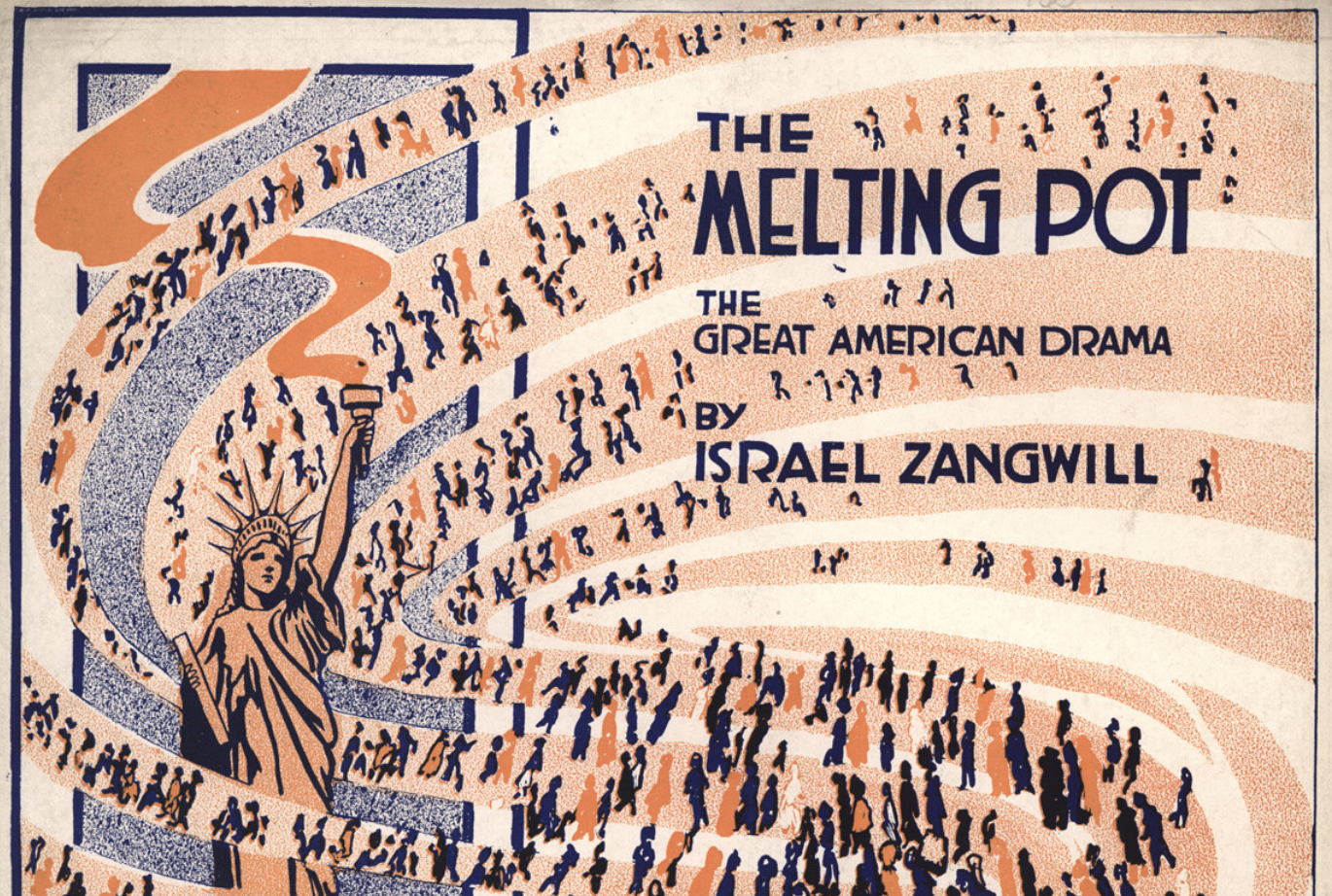
THEATRE PROGRAMME FOR 1916 PRODUCTION OF THE MELTING POT.
So if Jewish politics of the past was about more than only Zionism and Jewish statehood, then perhaps the present gaze on what Jewish politics is today can also be widened, beyond the current focus on Zionism and the state of Israel.
For a deeper look into Zangwill and his legacy, this special issue of European Judaism offers valuable insights, including a contribution by Laura.
Episode 61 – Zionism and Race
Podcasts are published by TLP for the purpose of encouraging informed debate on the legacies of the events surrounding the Lausanne Conference. The views expressed by participants do not necessarily represent the views or opinions of TLP, its partners, convenors or members.
 The Lausanne Project