
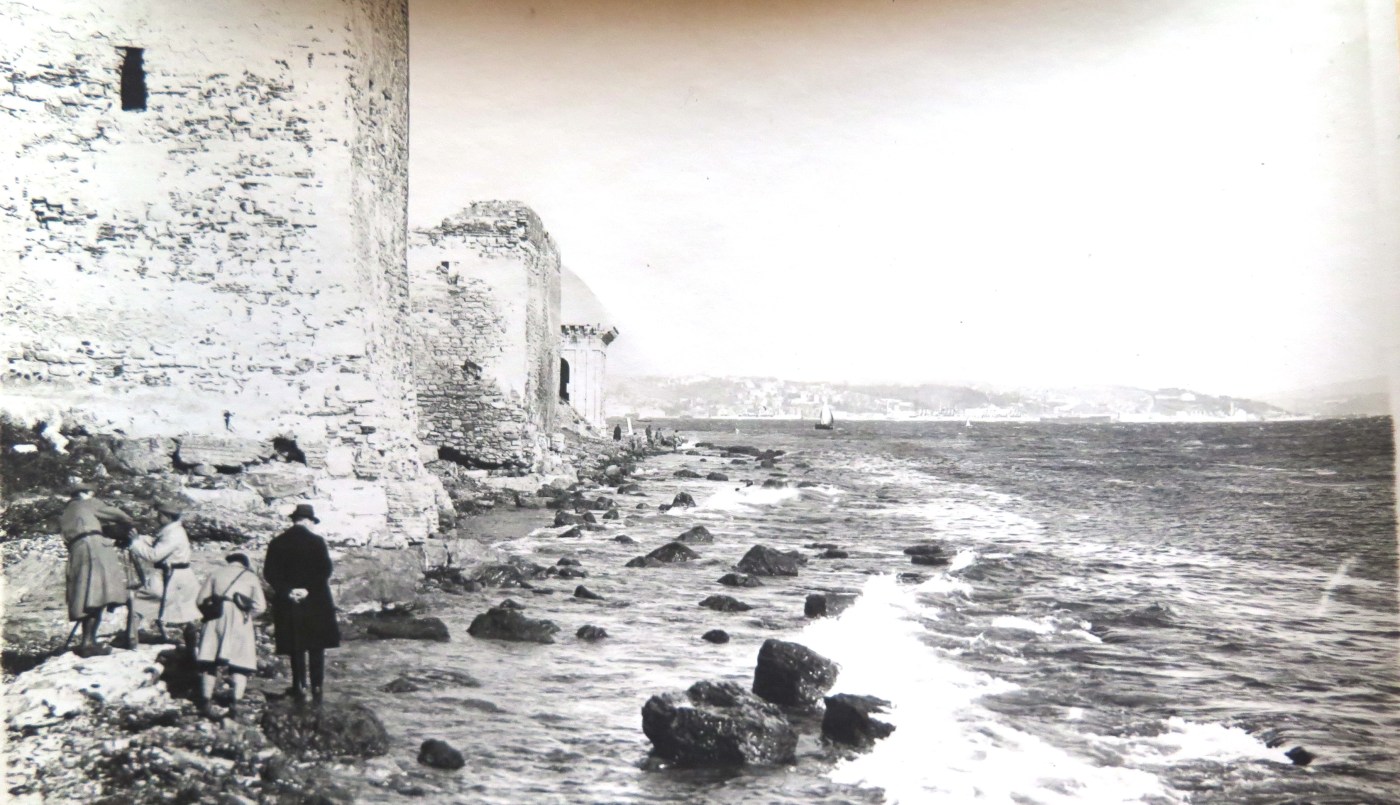
When the shooting starts, does the archaeology stop? Ceren Abi talks to Julia Secklehner about how the Ottomans and Allied powers engaged with and occasionally weaponized antiquities during the Great War.
Email: ceren@mesana.org
Ceren is program manager of MESA Global Academy, a program for displaced scholars from the Middle East.
In this episode, Ceren and Julia explore the relationships between the Ottomans and their allied powers, and examine their engagement with archaeology, museums, and antiquities during periods of conflict. Ceren challenges the idea that war results solely in destruction, emphasising how cultural heritage remained a central concern for both sides. Even during times of crisis, efforts to preserve and engage with cultural artefacts continue. Ceren also highlights the ongoing relevance of this issue, as we observe the impact of war on cultural sites in Iraq, Syria, Ukraine, and Gaza.
One example she shares is of an Ottoman soldier in the Gallipoli campaign who wrote to the Imperial Museum in Istanbul about antiquities he discovered while digging trenches, illustrating his commitment to cultural heritage even amid the horrors of battle. Ceren also discusses the planned actions taken by both Allied and Ottoman soldiers to study and protect monuments. When Russian forces entered the Ottoman Empire, for example, they brought scholars and archaeologists to focus on Byzantine and Christian history, aiming to substantiate territorial claims. Meanwhile, military leader Djemal Pasha established a monument protection unit to survey and safeguard cultural sites in Syria.
Ceren’s research highlights the competitive dynamics surrounding cultural heritage in wartime, as nations seek to assert historical claims that support territorial ambitions. It illustrates how the past influences modern conflicts and emphasises the importance of safeguarding cultural heritage during crises.
To find out more about the exhibition, click here. To read a TLP blogpost about it, click here.
Episode 79 – Heritage on the Frontline
Podcasts are published by TLP for the purpose of encouraging informed debate on the legacies of the events surrounding the Lausanne Conference. The views expressed by participants do not necessarily represent the views or opinions of TLP, its partners, convenors or members.
Works cited in this episode:
Abi, Ceren. “‘If It Is Not Too Paradoxical’: Archaeology in İstanbul under Occupation as a Window into Understanding the Creation of a Post-War Cultural Heritage Regime.” New Perspectives on Turkey 71 (2024): 62–82.
MacArthur-Seal, Daniel-Joseph. “Musical Convergence and Divergence in Occupied İstanbul, 1918–1923.” New Perspectives on Turkey 71 (2024): 43–61.
Özlü, Nilay. “Under the Shadow of Occupation: Cultural, Archaeological, and Military Activities at Topkapı Palace during the Armistice Period, 1918–1923.” New Perspectives on Turkey 71 (2024): 83–113.
Papatheodorou, Artemis. “Antiquities in Exile: Ottoman Greek Refugees’ Trauma and Ionian Antiquities.” New Perspectives on Turkey 70:71–88 (2024).
Tongo, Gizem, and İrvin Cemil Schick. “Islamic Art and Visualities of War from the Ottoman Empire to the Turkish Republic.” New Perspectives on Turkey 71 (2024): 14–42.
Tongo, Gizem. “Mini Dossier: War, Occupation, and Culture: Arts, Heritage, and İstanbul, 1918–1923.” New Perspectives on Turkey 71 (2024): 4–13.
Winter, Jay. “Postscript to the Mini Dossier on İstanbul, 1918–1923.” New Perspectives on Turkey 71 (2024): 114–20.
Woodall, G. Carole. 2016. “Listening for Jazz in Post-Armistice Istanbul.” International Journal of Middle East Studies 48 (1): 135–40.
 The Lausanne Project