
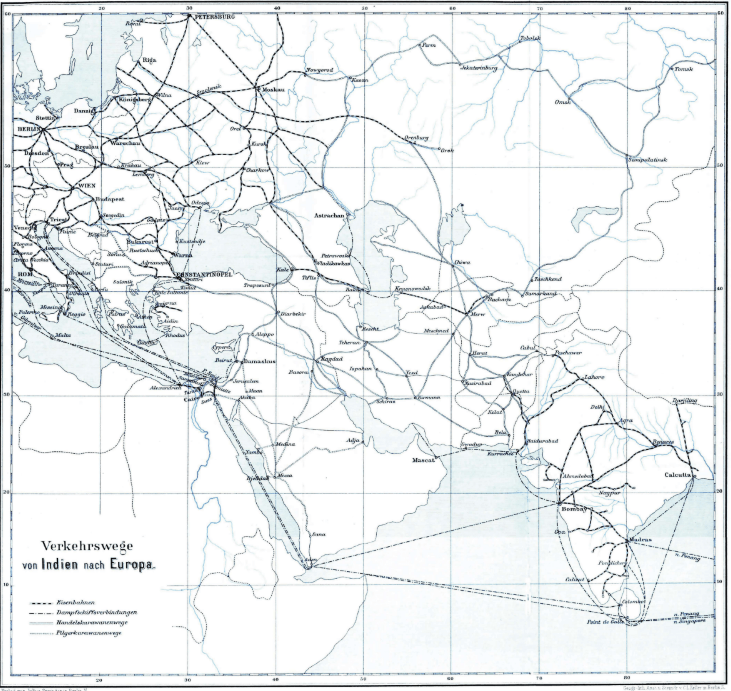
Around the world, the introduction of steam navigation intensified maritime traffic in the course of the 19th century. Mecca and Medina, the main Islamic pilgrimage sites in the Western part of the Arabian Peninsula (also called “Hejaz”, and then belonging to the Ottoman Empire), were transformed by the ensuing reduction in travel times into hotspots for the diffusion of cholera and the plague. Thus, in 1831, cholera took the lives of approximately 3,000 pilgrims. A decade and a half later, in 1846 it reached Mecca for the second time, claiming nearly 15,000 victims. Up to then, cholera’s geographic reach from Mecca was limited to the Near East and Northern Africa, with pandemics arriving in Western via the Russian landmass.
This changed in 1865, however, when pilgrims from Java and Bengal communicated cholera to their co-religionists from elsewhere on their arrival to Mecca. From there the epidemic spread via Suez to Egypt, Alexandria, and from its port across the Mediterranean. Within weeks, the whole of Europe was infected. The following year, an International Sanitary Conference was convened in Constantinople (modern Istanbul), where representatives from the major European powers asked the Ottoman Porte and Egypt to enforce strict control and quarantine measures upon Muslim pilgrims transiting their territories.
 The Lausanne Project